

Packing List for Trekking in Nepal
5th Jul, 2023
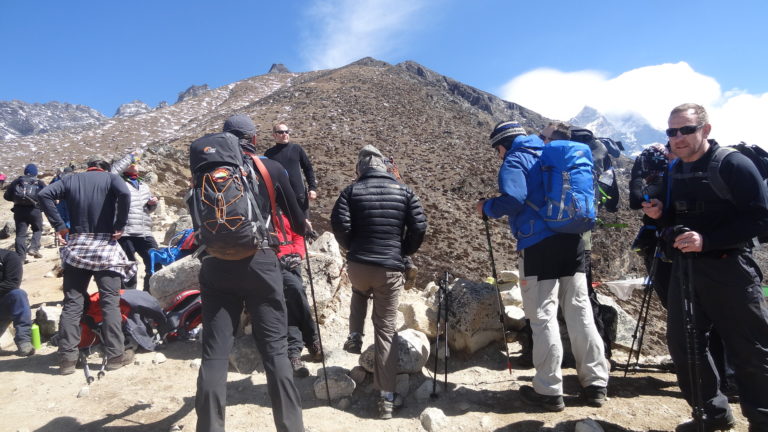
A comprehensive packing list is essential for Trekking in Nepal to ensure a safe, comfortable, and enjoyable Himalayan adventure. Nepal's trekking regions experience diverse climates, changing weather conditions, and varying altitudes, so packing the right gear is crucial. When planning your trek, choose lightweight, high-quality, and essential equipment that suits the season, trek duration, destination, and elevation. Packing wisely will help keep your backpack manageable while ensuring you are well prepared for changing mountain conditions throughout your journey.
Table of Contents
Nepal is the best destination for trekking and climbing, there are various trekking routes. Some trekking routes are short and easy and some are long and adventures.
Nepal has four seasons but spring and autumn are the main trekking season, so you have to know the trekking route and weather conditions before preparing a packing list for Trekking in Nepal.
Before planning a trip to Nepal for adventurous trekking, it is necessary to collect a packing list to guarantee a safe and enjoyable trip in Nepal.
If you are traveling to Nepal for the first time to trek in the Himalayas, you might have a few common questions, such as:
- What should I bring for trekking in Nepal?
- How should I pack for a trekking in Nepal?
- What is the best way to pack for trekking in Nepal?
- What is the recommended equipment and gear list for trekking in Nepal?
- What should I wear while trekking in Nepal?
These are common questions for every traveler, especially if you are planning to trek in Nepal for the first time. They are crucial because if you are not well-prepared with the right equipment, your trekking experience may be uncomfortable.
To help you prepare, we have created a general packing list for trekking in Nepal. Typically, at altitudes above 3,500 meters, the weather and temperatures across the Nepal Himalayas are quite similar.
What to wear while trekking in Nepal?
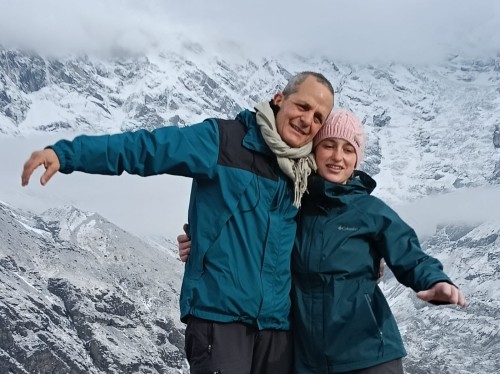
When trekking in Nepal, the right clothing is important for comfort and safety. Here’s a general guide on what to wear during the day while walking and after reaching camp. During the day, when trekking at lower altitudes in Nepal, trekkers can wear casual clothing, such as shorts and a t-shirt, similar to what they would wear in the city. However, it is important to apply sunscreen on exposed areas like the arms, legs, and face. A sun hat is also highly recommended.
At elevations between 2000 and 3000 meters, trekkers should wear a base layer (top and bottom) make of moisture-wicking materials like merino wool or synthetic fabrics (avoid cotton). A long-sleeve shirt and trekking pants are ideal, along with a fleece or insulating jacket. A waterproof and windproof jacket is recommended while walking, and warm clothes should be put on after reaching camp.
At elevations between 3000 and 5000 meters, trekkers should wear warm clothing while walking, such as an insulated jacket and trousers. After reaching camp, a down jacket or synthetic insulated jacket is necessary as temperatures drop. Additionally, warm socks, a hat, and gloves are essential to keep your head and hands warm during the cold evenings.
Here is a recommended packing list for trekking in Nepal that covers everything you need, from clothing to essential gear but you can surely be confident to customize it to suit your needs.
Packing List for Trekking In Nepal
Travel equipment is essential to pack before your trip. Below is the recommended packing list. We understand it may seem like a lot to carry from home, so we suggest packing light and bringing only the necessary items. If you’re missing something, you can hire or buy it in Kathmandu, especially around Thamel.
These general items are suitable for all seasons while trekking in Nepal, but the list may vary depending on the season and the duration of your chosen trek. Therefore, it’s important to ask your trekking organizer (High Pass Adventure Treks) for a detailed packing list specific to your trek. We will provide you with clear information about what to bring.
Documents:

Necessary Documents and permits
- Passport and 4 passport size photos
- Travel insurance details (in case an emergency evacuation if needed)
- Boarding passes for flights
- Driver’s license (if needed)
- Cash USD and Nepali currency for trekking
- Credit/Debit Card (Ensure you have $500 on your card incase an emergency helicopter evacuation is needed)
- Trekking Permits (this is need before start the trek)
Backpack and Bags
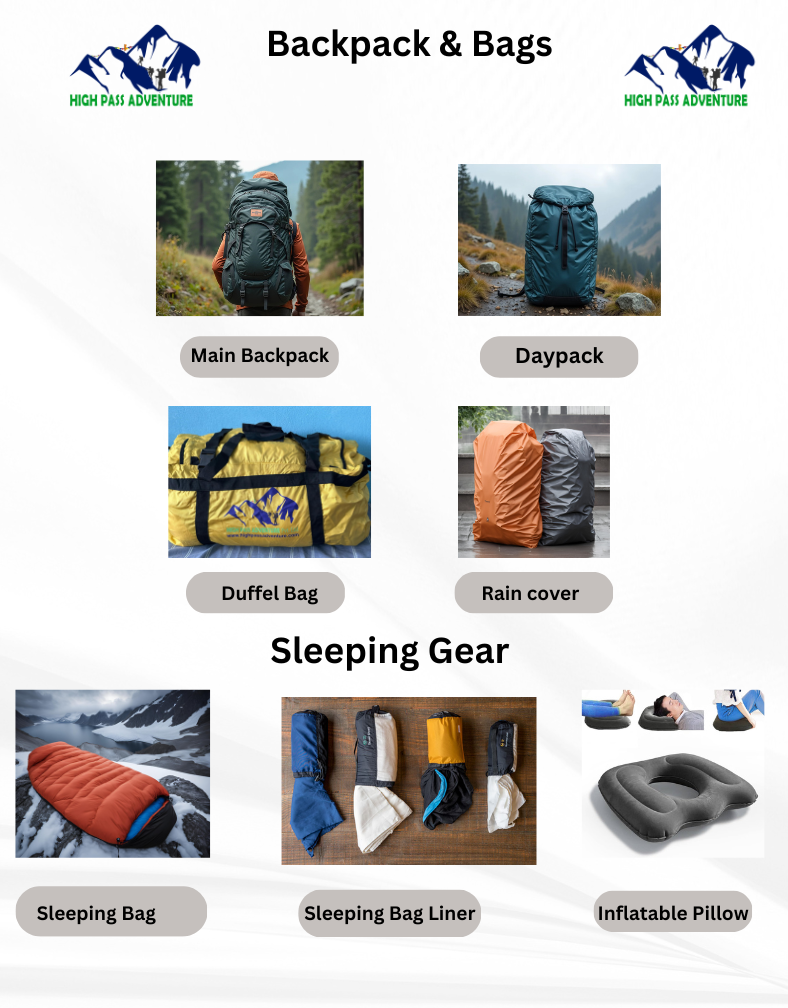 Backpack and Sleeping Bag
- Sleeping bag (Comfort rating -15 Celsius recommended)
- Sleeping bag liner (Optional)
- Bakpack (70L)
- Day Back pack (35L)
- Duffle Bag (optional)
- Rain Cover
- Pillow (optional)
Trekking Accessories and footwear
- Trekking boots: one pair lightweight
- Sandals for city and tea house footwear
- Shoes for the plane and tea houses (Optional)
- Gaiters for hiking in winter to the base camp
- Thin, lightweight inner socks
- Thick, warm wool hiking socks
- Sun Glass
- Trekking Poles
- Water Bottle
- Water purifications tablets
Clothing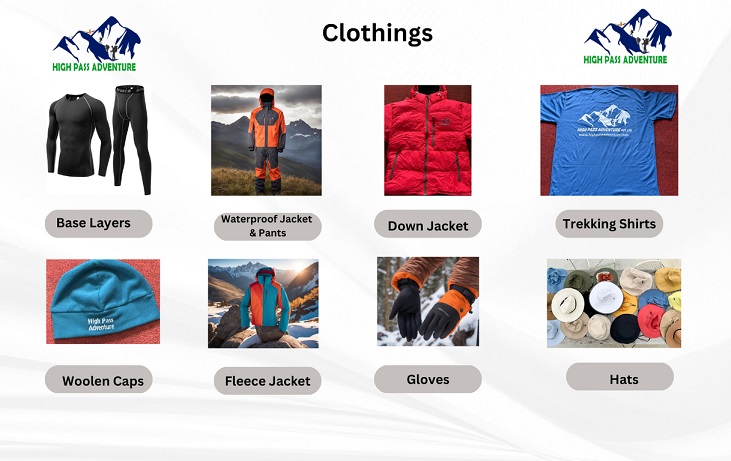
- Base Layers – Moisture-wicking thermal tops & bottoms.
- Trekking Shirts – Quick-dry shirts (both long & short-sleeve).
- Fleece Jacket – Keeps you warm at higher altitudes.
- Down Jacket – Essential for cold weather at high altitudes.
- Waterproof Jacket & Pants – Protects against rain and wind.
- Trekking Pants – Lightweight and durable.
- Gloves – Lightweight for trekking, insulated for cold weather.
- Hats & Caps – Sun hat for daytime, woolen beanie for cold nights.
Toiletries, First Aid, Electronics & Gadgets
- Sunscreen (SPF 50+) – High altitude sun is strong.
- Lip Balm with SPF – Prevents chapped lips.
- Wet Wipes & Hand Sanitizer – Limited water availability in some areas.
- Toothbrush & Toothpaste
- Quick-dry Towel
- First Aid Kit – Includes painkillers, band-aids, antiseptic, altitude sickness medication (Diamox), and any personal medications.
- Power Bank (10,000-20,000mAh) – Limited charging options on treks.
- Solar Charger (Optional) – Useful for long treks.
- Camera / GoPro – To capture stunning landscapes.
- Extra Memory Cards & Batteries
- Universal Travel Adapter
Snacks & Food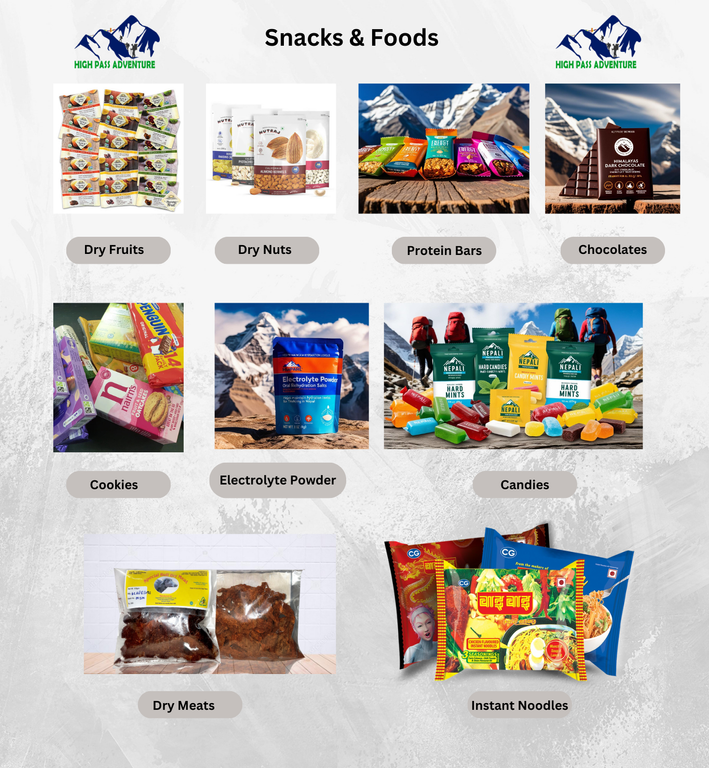
- Energy Bars & Nuts – For quick energy boosts.
- Electrolyte Powder – Helps prevent dehydration.
- Instant Coffee/Tea Bags – Useful in remote areas.
FAQs: Packing List for Trekking in Nepal
What Should I Pack for Trekking in Nepal?
You should pack all the essential trekking gear needed for a safe and comfortable trek in Nepal. This includes sturdy hiking boots, layered clothing, a waterproof and windproof jacket, a warm down jacket, trekking pants, trekking poles, a sleeping bag, gloves, a warm hat, sunglasses, a headlamp, a comfortable backpack, reusable water bottles, personal toiletries, and a basic first-aid kit.
It is important to pack light while carrying all the essential items required for different weather conditions, as temperatures in the Himalayas can change rapidly. Your packing list should also be based on the season, trekking destination, duration, and altitude of your trek.
For a detailed packing checklist or personalized advice, please contact High Pass Adventure. Our experienced team will help you prepare the right gear and equipment for your chosen trekking route and season, ensuring a safe, comfortable, and enjoyable Himalayan adventure.
How Much Luggage Should I Pack and Bring for a Trek in Nepal?
Pack as lightly as possible and bring only the essential items needed for your trek. We recommend bringing a maximum of 20 kg of luggage to Nepal. Of this, 15 kg can be taken on the trek, while the remaining 5 kg can be stored safely at your hotel in Kathmandu.
If you are trekking without a porter, try to keep your backpack to no more than 10 kg so you can walk comfortably. If you hire a porter, we recommend packing 10–15 kg (22–33 lbs) in your duffel bag, as this is the standard carrying weight for one trekker. You should also carry a small daypack containing your daily essentials, such as water, snacks, a camera, extra clothing, rain gear, personal medications, and important documents.
What Clothing Is Best for Trekking in Nepal?
Layered clothing is the best choice for trekking in Nepal, as temperatures can vary significantly depending on the altitude, season, and time of day. Pack moisture-wicking base layers, insulating mid-layers, a warm fleece or down jacket, and a waterproof and windproof outer shell to stay comfortable in changing weather conditions.
Layering allows you to easily add or remove clothing as temperatures change throughout the trek, whether you are walking in warm valleys, cool forests, or high-altitude mountain passes. Choosing high-quality, lightweight, and breathable clothing will help keep you warm, dry, and comfortable throughout your Himalayan trekking adventure.
Do I Need a Sleeping Bag for Trekking in Nepal?
Yes. A warm sleeping bag is highly recommended for trekking in Nepal, especially for high-altitude teahouse treks such as the Everest Base Camp Trek, Manaslu Circuit Trek, and Kanchenjunga Trek. It is essential for camping treks such as the Dhaulagiri Circuit Trek, Saribung Pass Trek, and Makalu Base Camp Trek, where you will spend nights in tents.
Although many teahouses provide blankets, they may not be warm enough at higher elevations, and during the peak trekking seasons it can be difficult to obtain extra blankets because of the large number of trekkers. Nighttime temperatures often fall below freezing, particularly above 3,500–4,000 meters.
Bringing a high-quality sleeping bag will provide extra warmth, comfort, and better sleep, helping you stay comfortable throughout your trek. Choose a sleeping bag with a temperature rating suitable for your trekking season and the maximum altitude of your route.
What Type of Footwear Should I Bring for Trekking in Nepal?
Choosing the right footwear is essential for a safe and comfortable trekking experience in Nepal. You should bring well-fitted, waterproof hiking boots with good ankle support to protect your feet and provide stability on rocky, uneven, and steep mountain trails.
It is also recommended to pack a pair of lightweight sports shoes, sandals, or camp slippers to wear in the teahouses after each day's trek, allowing your feet to rest and recover. In addition, bring several pairs of moisture-wicking trekking socks to keep your feet dry, comfortable, and help prevent blisters.
For high-altitude treks during winter or on snow-covered trails, gaiters are highly recommended. They help keep snow, mud, rocks, and moisture out of your boots, keeping your feet warm and dry in challenging mountain conditions.
How Can I Pack the Right Gear for Different Weather Conditions During a Trek in Nepal?
Packing the right gear for trekking in Nepal is essential because mountain weather can change quickly, especially at higher elevations. It is common to experience cold mornings and evenings, warm daytime temperatures, and occasional rain, wind, or snow, depending on the season and trekking route.
To stay comfortable in all weather conditions, pack layered clothing that can be easily added or removed throughout the day. Essential gear includes a waterproof and windproof jacket, thermal base layers, a warm fleece or down jacket, gloves, a warm hat, waterproof hiking boots, and a rain cover for your backpack. During winter or high-altitude treks, you should also pack gaiters, insulated gloves, and additional warm clothing.
Choosing the right gear for the season, altitude, and trekking destination will help keep you warm, dry, and comfortable, ensuring a safe and enjoyable trekking experience in the Nepal Himalayas.
What Personal Items Should I Carry During the Trek in Nepal?
During your trek in Nepal, you should carry a small daypack containing all your essential personal items. Recommended items include sunscreen, lip balm, sunglasses, a reusable water bottle, water purification tablets or a water filter, personal toiletries, hand sanitizer, wet wipes, personal medications, a basic first-aid kit, a power bank, charging cables, and a headlamp.
You should also carry copies of your passport, trekking permits, travel insurance policy, and other important documents in a waterproof bag or pouch. Keeping these essential items with you each day will help ensure a safe, comfortable, and well-prepared trekking experience in the Nepal Himalayas.
Can I Rent Trekking Gear in Nepal for Trekking in the Himalayas?
Yes. You can rent most trekking gear in Thamel, Kathmandu, before starting your trek. Rental equipment includes sleeping bags, down jackets, trekking poles, crampons (when required), backpacks, and other essential trekking gear at reasonable prices.
If you are planning a peak climbing trip, such as Island Peak or Lobuche Peak, you can also rent climbing equipment in Dingboche, including climbing boots, crampons, harnesses, helmets, ice axes, ascenders, and other technical gear.
We are happy to recommend the best and most reliable rental shops in Thamel, where you can hire quality equipment without paying a large security deposit. However, for the best fit, comfort, and hygiene, we recommend bringing your own hiking boots, socks, and personal clothing.
If you book your trek with High Pass Adventure, we can also help you rent or arrange quality trekking equipment at competitive prices, making your trekking preparation easier and more affordable.
Should I Pack Differently for Different Trekking Seasons in Nepal?
Yes. Your packing list should be tailored to the season and trekking destination because weather conditions in Nepal vary significantly throughout the year.
During winter (December to February), you will need warmer clothing and cold-weather gear, including a quality down jacket, thermal base layers, insulated gloves, a warm hat, and a sleeping bag suitable for sub-zero temperatures.
In spring (March to May) and autumn (September to November), layered clothing is the best option. Pack moisture-wicking base layers, insulating mid-layers, and a waterproof and windproof outer jacket to stay comfortable during mild daytime temperatures and cool mornings and evenings.
For the monsoon season (June to August), waterproof clothing, a rain jacket, rain pants, waterproof backpack covers, and quick-drying clothing are essential to protect you from frequent rainfall and humid conditions.
Packing the right clothing and equipment for the season will help ensure a safe, comfortable, and enjoyable trekking experience in the Nepal Himalayas.
How Can a Trekking Agency Help with My Packing List for Trekking in Nepal?
A professional trekking agency like High Pass Adventure will provide you with a detailed packing checklist based on your trekking destination, season, altitude, duration, and itinerary. Our experienced team will advise you on what to pack, what to leave behind, and which items can be rented in Nepal, helping you avoid carrying unnecessary weight.
We also offer practical advice on selecting the right clothing, footwear, and trekking equipment for your chosen route and the expected weather conditions. If needed, we can recommend reliable gear rental shops or help you arrange quality equipment at affordable prices.
With the guidance of High Pass Adventure, you can pack confidently and be fully prepared for a safe, comfortable, budget-friendly, and enjoyable Himalayan trekking adventure.
Conclusion
We highly recommend packing as light as possible for traveling to another country and trekking in Nepal . Layers are essential for adjusting to changing weather conditions, and moisture-wicking fabrics help keep you dry and comfortable. Lastly, be prepared to acclimatize properly to high altitudes and be cautious about altitude sickness.
Always check the weather and specific requirements for your trek and adjust your packing list accordingly. It's also a good idea to rent or purchase some gear in Kathmandu or other major towns in Nepal if you don't want to carry everything from home. You can consult with local trekking agency in Nepal before prepare to packing list for trekking in Nepal
Are you interested on any of your travel serveices?
Make Inquiry NowRecent From Blog
15th Jun, 2023
21st Feb, 2021
28th Feb, 2018
5th Sep, 2023

13th May, 2019
19th Feb, 2019
8th Feb, 2021
21st Jan, 2021
29th Jul, 2020
3rd May, 2019
30th Apr, 2020

3rd Apr, 2020
17th Jul, 2020
26th Mar, 2020
31st Mar, 2020
19th Jun, 2023
11th Feb, 2020
11th Mar, 2020
27th Sep, 2019
17th May, 2019
26th Jul, 2020
6th May, 2019
5th Mar, 2019
7th Mar, 2020
18th Feb, 2019
12th Sep, 2019

27th Mar, 2018
27th Mar, 2019
2nd Mar, 2019
16th Jan, 2019

1st Jul, 2023
5th Jul, 2023

5th Jul, 2023

5th Jul, 2023

5th Jul, 2023
5th Dec, 2019
6th Jan, 2019
28th Feb, 2018
9th Dec, 2018
11th Dec, 2018

5th Oct, 2023

3rd Jan, 2024
.jpg)
27th Jan, 2024
29th Jan, 2024
19th Jan, 2025

7th Feb, 2025

17th Feb, 2025
9th Mar, 2025

15th Mar, 2025

18th Mar, 2025

23rd Mar, 2025

25th Mar, 2025

26th Mar, 2025

24th Apr, 2025

21st May, 2025

21st May, 2025

22nd Jun, 2025

22nd Jun, 2025
4th Jul, 2025

14th Jul, 2025

14th Sep, 2025
26th Sep, 2025
20th Dec, 2025
28th Jan, 2026
17th May, 2026
18th May, 2026
2nd Jun, 2026
7th Jun, 2026
9th Jun, 2026
13th Jun, 2026
14th Jun, 2026
2nd Jul, 2026
7th Jul, 2026
16th Jul, 2026
25th Jul, 2026

2nd Aug, 2026
5th Aug, 2026
9th Aug, 2026